





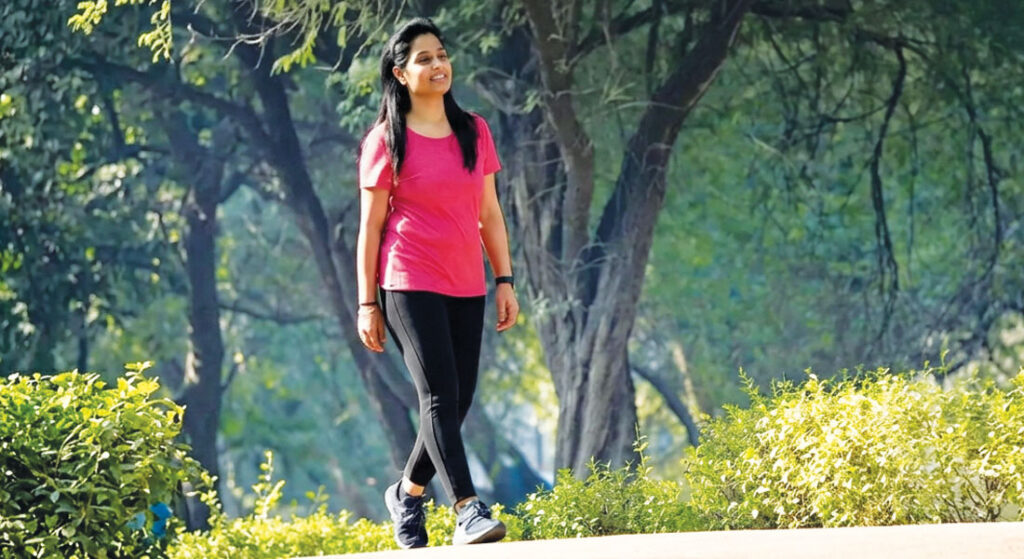
We have been taught to equate speed with progress — to move fast, think fast, produce fast. What we are rarely taught is the cost: a mind that rarely rests, a body that never fully exhales, a nervous system that has forgotten what stillness feels like.
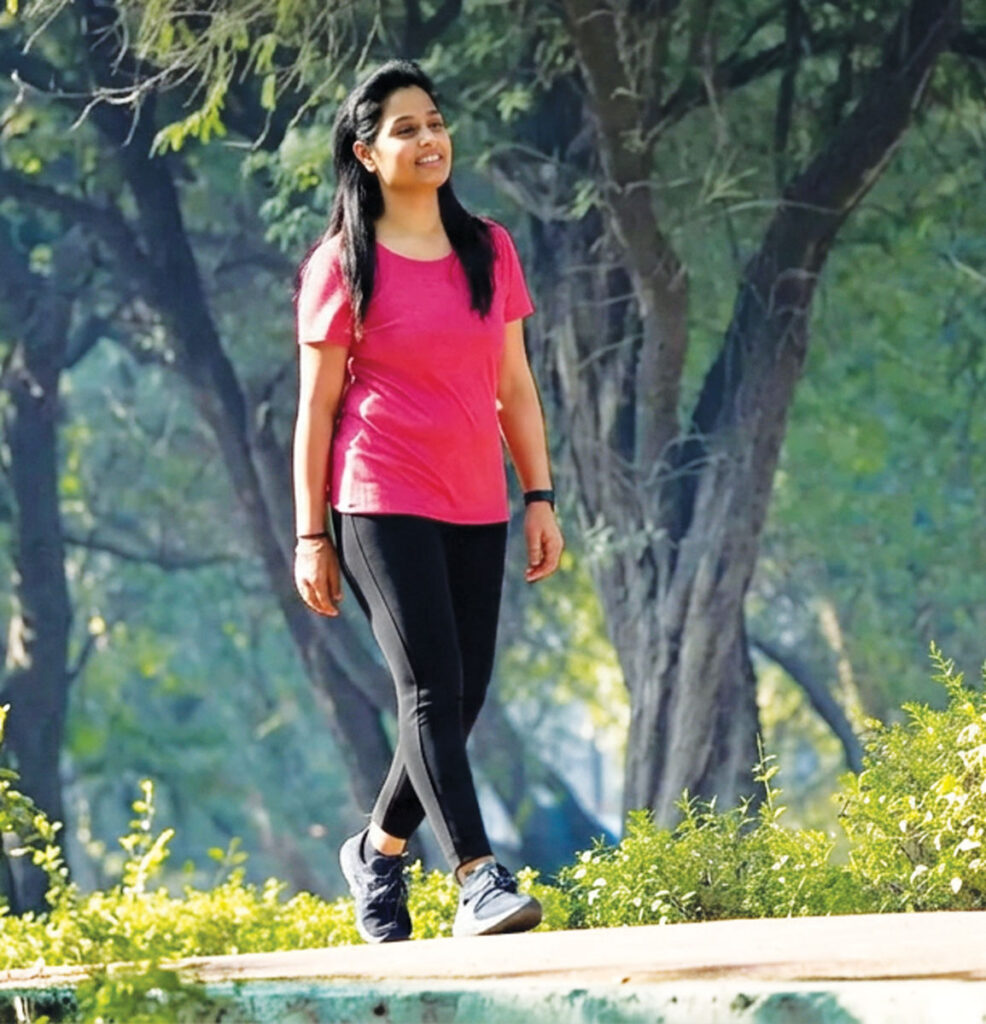
There is a practice so simple it feels almost too ordinary to recommend — and yet it is one of the most effective tools available for real rest and clarity.
It needs no equipment, no subscription, no special location. Only intention, and about fifteen minutes.
The Practice
- Walk very very slowly.
- Breathe lightly, slowly and deeply.
- Become fully aware of your long exhalation. Take care of your exhalation, and your inhalation will take care of itself.
That is it. That is the whole instruction. But a gentle stroll like this is, in fact, a precise and powerful reset for your body and your state of mind — worth understanding a little more closely.
What it does to your body
Very slow walking — about 30–50 steps a minute — does something unusual: it puts you in real contact with the ground beneath you. Each step becomes deliberate rather than automatic. This simple attention pulls the mind out of its usual loop of worry and planning, and anchors it in the present moment. You stop replaying the past or rehearsing the future. You simply arrive.
Very slow walking — about 30–50 steps a minute — puts you in real contact with the ground. Each step becomes deliberate, not automatic.
At the same time, the slow rhythmic movement of your legs works like a pump for your lymphatic system — the body’s internal drainage and immune network, which unlike the heart has no pump of its own. It depends entirely on movement and breath. In a very real sense, you help your body cleanse itself with every slow step.
What it does to your breath
Breathing slowly and deeply — around four to six breaths a minute — does something most people don’t expect. We assume more breathing means more oxygen. Often the opposite is true: breathing too fast actually reduces the oxygen reaching your brain and tissues. Slowing the breath restores this balance. The mind clears. The body relaxes, cell by cell.
This same slow, deep breathing also helps move lymphatic fluid along, working hand in hand with the walking itself — the two amplify each other.
What awareness of the long exhale changes
This is where the practice becomes powerful.
Your nervous system has two settings. Breathing in switches on alertness and readiness. Breathing out switches on rest and repair. Most of us, in modern life, stay stuck in the ‘alert’ setting nearly all day — physically braced, even when nothing is actually wrong.
You can’t hold onto anxiety while breathing out slowly and fully. It soon improves your baseline calm, making you less reactive… it takes more to rattle you.
The long exhale is the body’s natural off switch — and paying attention to it makes that switch far more effective. As you follow your breath all the way out, your heart rate slows, your jaw unclenches, your shoulders drop. The body simply stops bracing for an emergency that isn’t coming.
You cannot hold onto anxiety while breathing out slowly and fully — the two states don’t coexist. And with regular practice over a few weeks, your baseline calm genuinely improves: you become less reactive, and it takes more to rattle you.
The invitation
You do not need to walk far, or fast. You do not need music, a podcast, or a destination.
Find a space. Walk as if time has agreed to slow down with you. Breathe as though the air itself is something worth receiving gently. And when you exhale — follow it. Stay with it. Let it complete.
Then wait, just a moment, in the quiet gap at the end of the breath.
Do this for 15 minutes. Notice what returns to you.
Your body’s medicine was never complicated. We only made the mistake of assuming it had to be.
Optimal parameters for practice
- Walking pace: 30–50 steps per minute
- Breath rate: 4–6 breaths per minute
- Inhale: 4 seconds / Exhale: 6–8 seconds
- Duration: 15 minutes minimum
- Surface: natural ground where possible; barefoot amplifies the grounding effect
I have been practising this myself, close to an hour a day, for nearly a year now — this piece comes from that daily experience, not from a book.
The writer is a member of RC Bangalore Rajmahal Vilas, RID 3192
A summary worth remembering
The still point at exhale’s end: Direct contact with inner stillness — the real reward of the practice”
Very slow walking: Grounds your attention and gets the lymphatic system moving
Slow, deep breathing: Improves oxygen delivery, calms the body at a cellular level
Aware long exhalation: Switches on the body’s calming system, slows the heart, releases tension