





At the table next to mine were seated four people. They ordered a bottle of water and the waiter filled up their glasses. They ate heartily and gently sipped on the water. When they left after paying the bill, all their glasses were lying on the table half full of water. The waiter cleared the table, removing the four glasses and throwing their content into the washbasin. What a waste!
I watched silently and sadly. There was nothing I could do. I wondered if I should have asked the four of them to finish the water in their glasses. But that would have been an intrusion. Through this column I want to tell our readers that wasting water is not a virtue. Least of all at a time when the expert prognosis is that water scarcity is looming large on the horizon. This year’s deficient rainfall means that the country is facing one of the worst water shortages in a decade.
Data recently put out by the Central Water Commission (CWC), which monitors 178 major reservoirs across India, reveals that the combined live storage of the water reservoirs was at 132.734 billion cubic metres (BCM) at the end of the monsoon; much lower than last year’s 166.856 BCM. The storage this year was below the 10-year average of 151.118 BCM. This means that our water position is not very comfortable and farmers still need its supply for their winter crops.
When the above data is combined with what the India Meteorological Department (IMD) has indicated, we are looking at a difficult situation ahead. The IMD says that the post-monsoon rainfall between October and December could remain below normal, potentially limiting replenishment of our reservoirs and directly impacting the moisture in the soil and the water table. With rain deficiency, irrigating the crops will be a major issue.
Don’t leave a half-filled glass of water on your dining table. Drink it all up!
Researching for solutions to mitigate the situation, I came across many sources on the net discussing the problem. But what caught my attention on the things we can do was on the Concern Worldwide website. It provides an overall global perspective on the situation. It says: “At least 50 per cent of the world’s population experiences high water stress for at least one month every year. Twenty-six per cent lack safely managed drinking water, and a full 41 per cent lack adequate sanitation services. By 2050, drought could impact up to 75 per cent of people around the world.”
The figures are stark, and the challenge is enormous. But the solutions are there — and proven to work. So here are some solutions to the water crisis:
Water trucking
The simplest solution to this crisis is water trucking. It is one of the quickest short-term solutions to scarcity. Trucks are chartered into areas like refugee camps or drought-stricken communities. This is an expensive solution and not a long-term fix for a crisis, but it can be a life-saving stopgap in dire situations.
Desalinators and water purification tablets
Areas without access to safe, potable water often have access to some form of non-potable water. There are options to work with what’s available. For seawater, we can use individual, portable desalination devices (or desalinating at a mass scale). Water purification tablets are also handy for freshwater sources, killing microorganisms and pathogens that cause typhoid, cholera and other waterborne illnesses.
Protect existing freshwater sources
Sometimes, the solution isn’t creating a new water source, it’s protecting the one a community already has…. Simple protective structures can safeguard these resources by keeping the surrounding area free from human and animal interference, helping ensure long-term access to clean water.
Tackle leaks and other sources of water waste
Plugging these holes in both individual homes and within larger infrastructure and pipes will help conserve what’s already on hand. Community members usually know where things need to be repaired and should be prepared to take on required improvements with the right technical and financial support.
Rainwater harvesting
A solution that’s both low-tech and low-cost in areas that get enough rainfall: Collect and store rainwater. Build rainwater harvesting systems on a collection surface like a roof and create a pathway for the water to run into a storage tank. It can be rendered potable with some processing and is also useful for agriculture (which takes up a lot of water in stressed countries), livestock, schools and hospitals. The systems are also easy for communities to manage.
Water management committees
When community members take ownership of their local water systems, water is more available to those who need it most. Water management committees are made up of locally elected members who oversee and manage local resources.
Eliminate water dumping and other pollutive activities
Approximately one million people die each year due to water contamination. We can’t solve this issue on our own as individuals, but we can work together to push for actions that ban and enforce restrictions on wastewater dumping.
Improve water infrastructure at the national level
In fragile states, it’s often the case that there isn’t enough government infrastructure or capacity to deliver water, sanitation and hygiene (WASH) services. This is an explanation, but it isn’t an excuse.
So far so good. But what can we do at a personal level? First, please finish the water poured out for you in your glass in a restaurant. It will hydrate you, instead of getting thrown into the basin to mingle with wastewater. Better still fill your glass with only as much as you’re likely to drink.
Other ways to decrease your water footprint
Brushing your teeth twice a day is extremely important, but don’t leave the tap running while you brush. Quite a lot of water gets wasted. Similarly, while having a shower and waiting for warm water, place a bucket under the shower so that the water can be collected, and later used for the plants or mopping the house.
If you are using a washing machine, collect the clothes to be washed and do them all at once. Avoid using the machine for just one or two clothes. Saves both water and electricity.
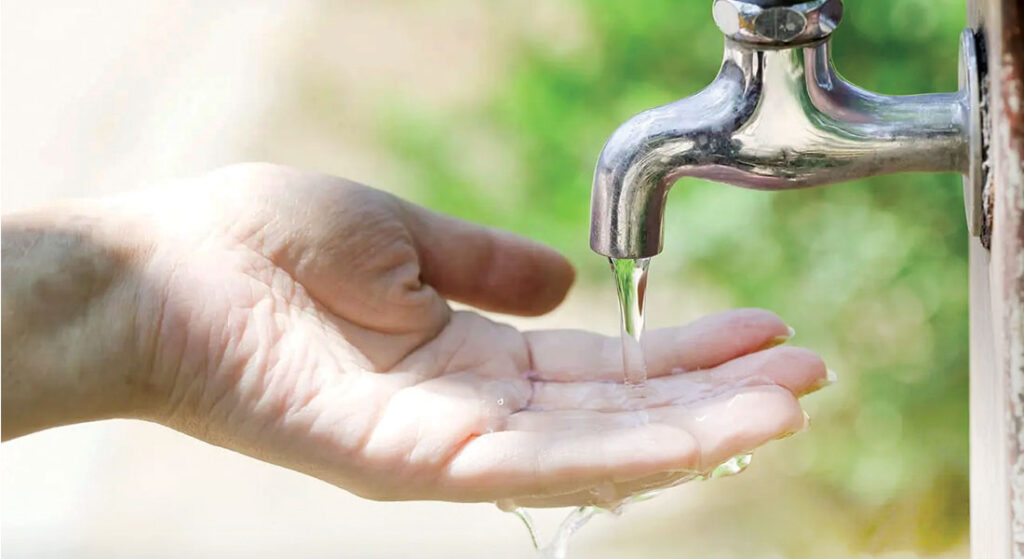
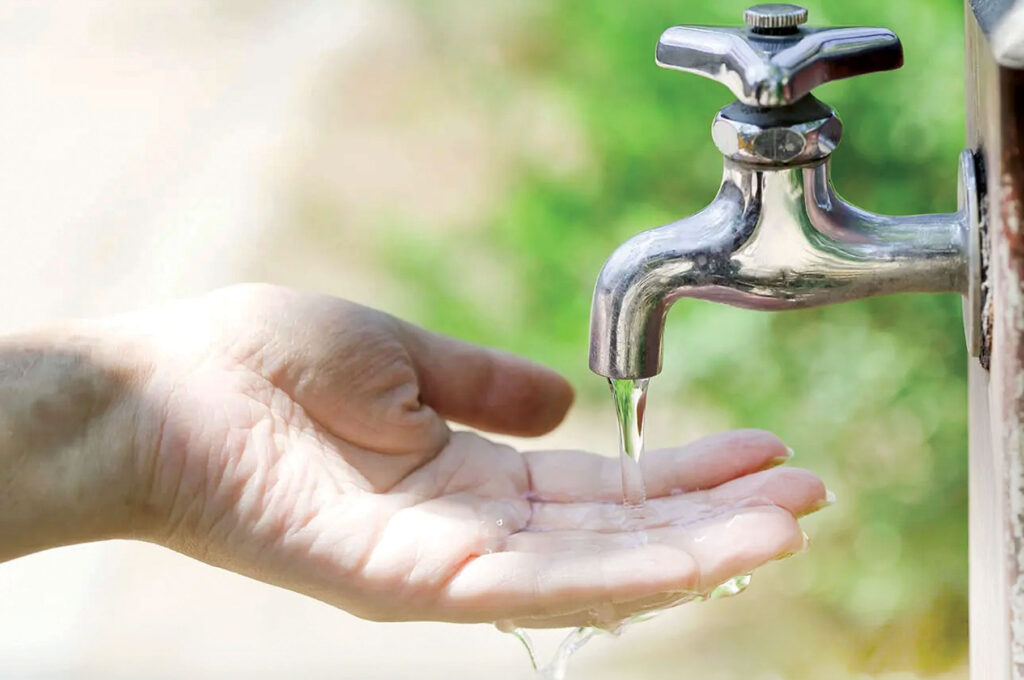
Don’t overlook small leaks… a leaking tap or a leaking pipe can lead to a lot of water wastage.
Last, but not the least. Don’t leave a half-filled glass of water on your dining table. Drink it all up!
The writer is a senior journalist who writes on environmental issues