



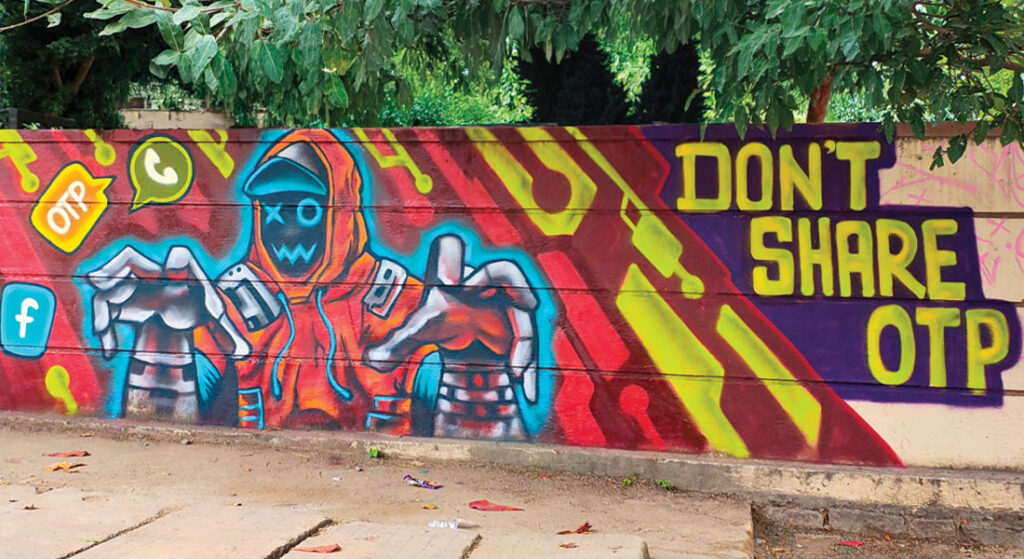
The outer walls of the Baiyappanahalli Police Station in Bengaluru have been transformed with vibrant graffiti carrying a simple message against drug abuse: Beda Bro (Don’t do it, bro), in a mix of Kannada and English. The artwork has become a showstopper, with passers-by, especially youngsters, stopping to take selfies against the colourful backdrop.

The graffiti is an initiative of the Rotary E-Club of Bangalore, RID 3191, and is the club’s second such project. The first, created on the walls of the Adugodi Police Station, highlighted three social issues — women’s safety, drug abuse and cybercrime. Professional artists from Kolkata, Mumbai and Bengaluru were engaged for the work.
“We did the first artwork in 2024 after a meeting with the Karnataka Police, who were keen to raise awareness about women’s safety in the city. We then came up with the idea of storytelling through powerful paintings that would stay in people’s memories long after they had walked past,” says Nivedita Dutt, a director of the club.
Graffiti has always been the artistic language of the rebel and therefore easily catches the attention of the youth.
Her interest in graffiti was sparked few years ago when she visited her son in Ghent, Belgium, and came across an alley adorned with graffiti art. “It looked fabulous. I was instantly struck by the idea of replicating it in India to convey an important message,” she says.
More recently, Nivedita approached the Baiyappanahalli Police Station seeking permission to use its walls for another social awareness project. “The police suggested that we focus on drug abuse, as they have taken it upon themselves to work towards making the city drug-free by 2028. Their tagline was ‘Beda Bro’.”
Graffiti artist Sayam Porey from Kolkata, who had worked on the earlier project, was brought in again. The new artwork uses a striking collage of images to depict the consequences of drug abuse. “Each image tells its own story of agony, sharp and clear,” says Nivedita.

Explaining the choice of graffiti, an art form often associated with rebellion and, in some contexts, illegal wall painting, she says, “Graffiti has always been the artistic language of the rebel and therefore easily catches the attention of the youth. We are using its visual appeal to focus attention on important social issues.”
The club plans to create more such murals across Bengaluru. “DGE Harini Ravindranath is keen on taking this initiative to 60–100 walls next year,” says Nivedita.