





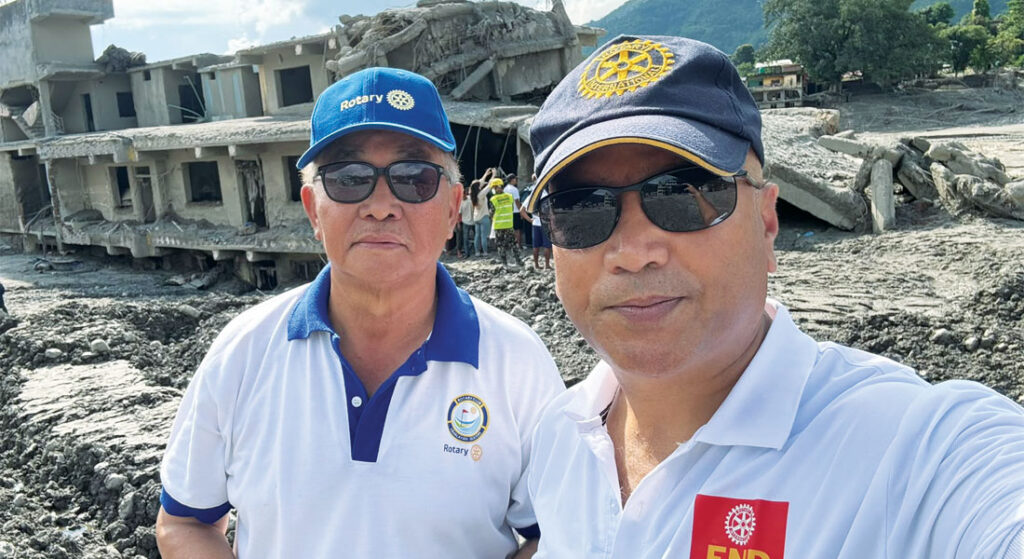
For Suraj Bhandari, the flash floods in Nepal were not a distant disaster. He is from Chitwan, one of the affected areas, and watched with concern as the Narayani River, a tributary of the Trishuli, swelled and damaged crops and property.
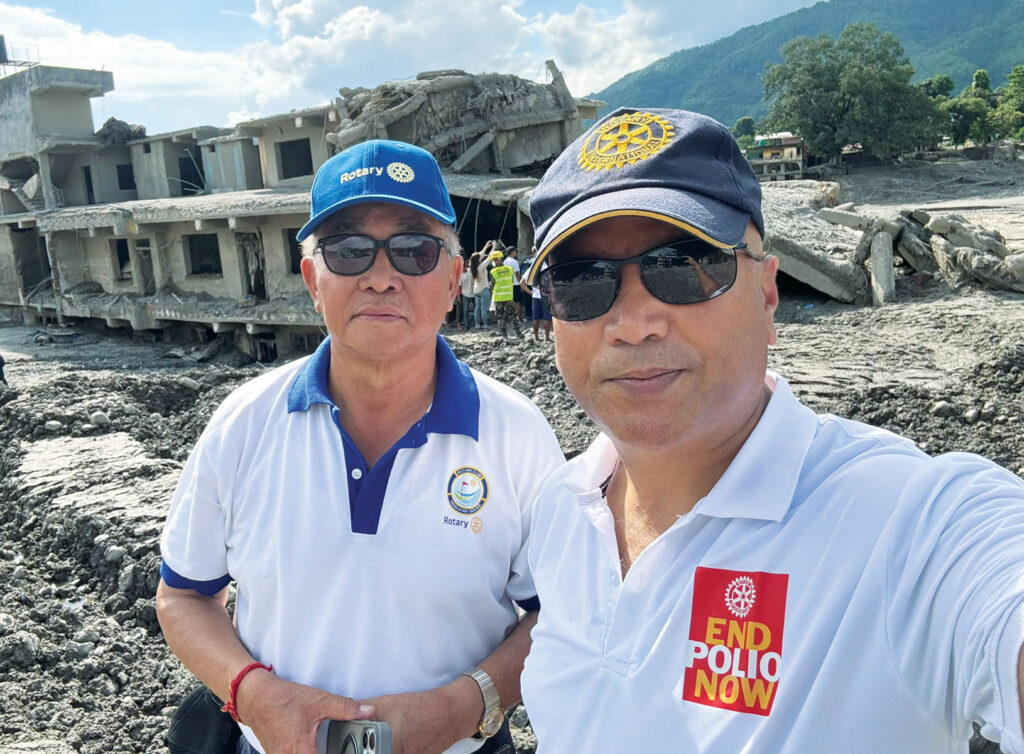
As Rotaract secretary of RID 3292, which covers Nepal and Bhutan, Bhandari was also closely involved in the relief response. Following an emergency appeal from the Nepal Prime Minister’s Office, he and other Rotaractors, guided by DRR Prakash Sharma Gaire, moved quickly to organise assistance.
“DRR Sharma called for a meeting with the Rotaract club heads in the district to formalise a plan of action,” he said. District 3292 has around 6,000 Rotaractors in 192 clubs.
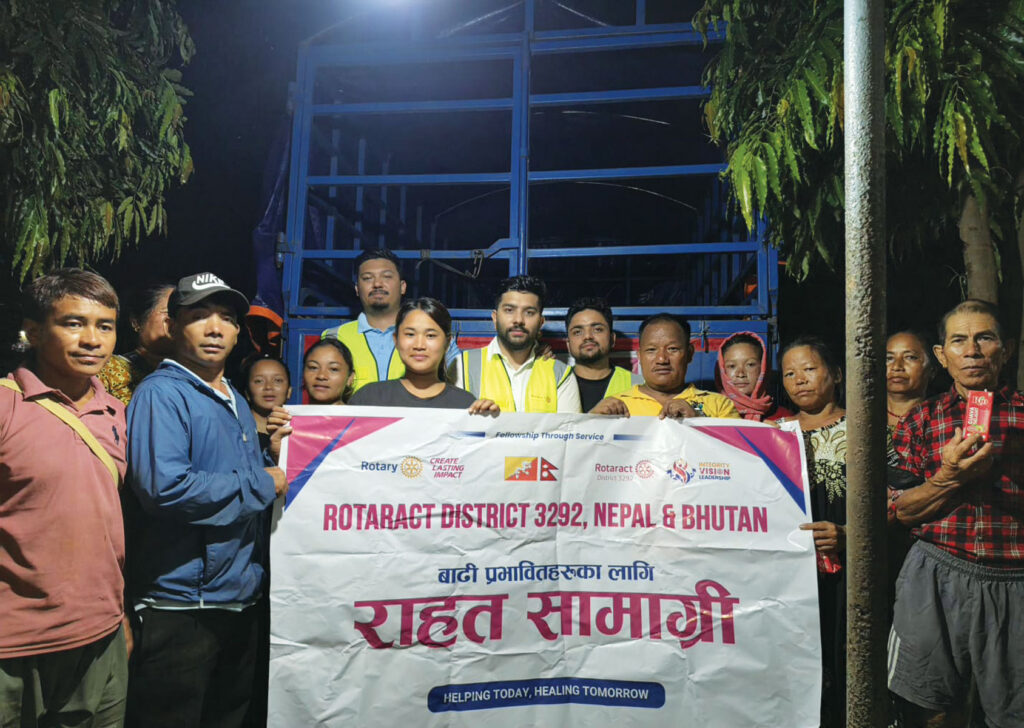
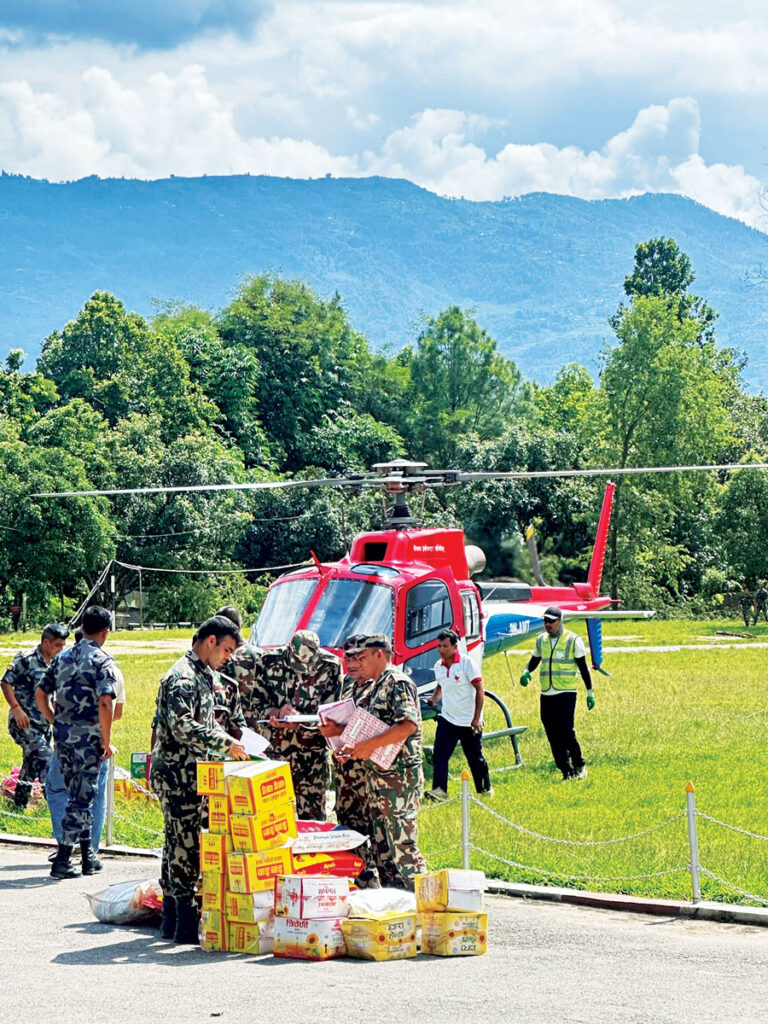
Collection centres were set up in Kathmandu, Chitwan, Bhairahawa and eastern Nepal. Medicines, infant food, toiletries, groceries, fruits, noodles and biscuits were collected at these centres and sent through the Nepal Army to government relief camps in Rasuwa, Chitwan and Nuwakot.
The floods struck several communities along the Lende Khola and Trishuli river systems after an ice and rock avalanche on the Langtang Lirung peak in the Himalayas caused a sudden surge of water downstream on August 26. Rasuwa, Nuwakot, Dhading, Chitwan, Gorkha and Tanahun were among the affected districts. Roads and bridges were washed away, making rescue and relief operations difficult.
“It was devastating to see entire villages wiped away by the flash floods. In several places we had to walk over building debris and destroyed homes to deliver aid material to people,” said Bhandari.
Two phases of distribution had been completed when he spoke to Rotary News a week after the glacier collapse, with a third underway. This phase included tents, gas stoves, dustbins, mosquito nets, blankets, towels and bedsheets for families in Nuwakot.
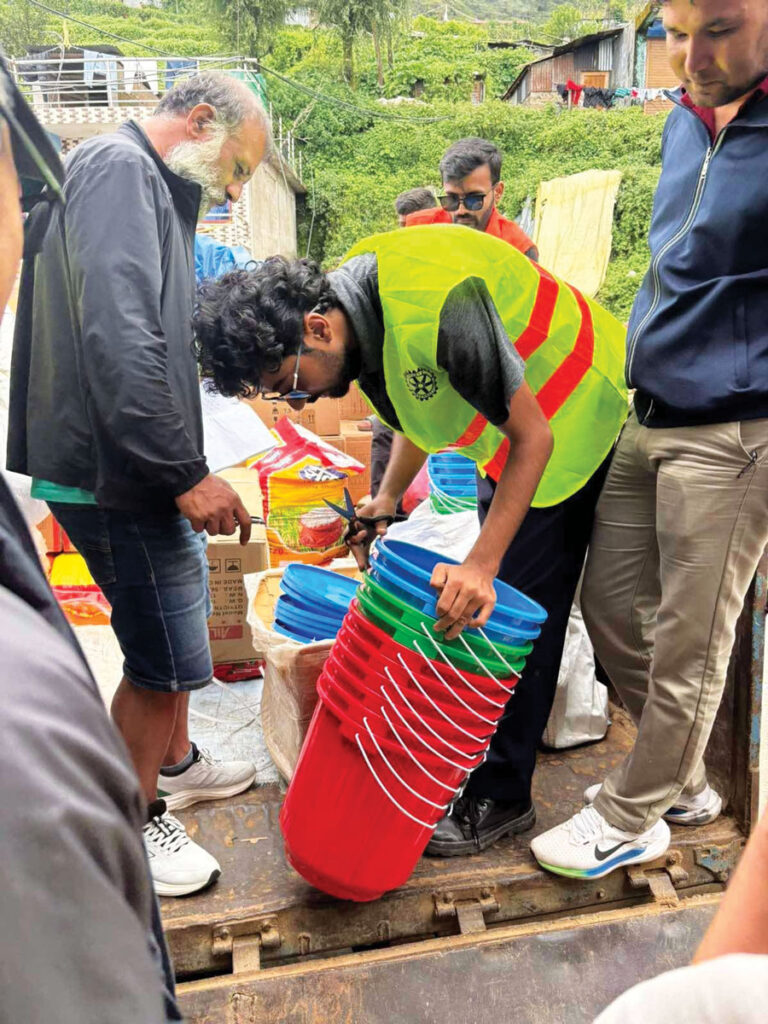
“We just dont know where to start and how to console people who have lost their entire homes and all their belongings in the flash floods. Many of them are still searching for their loved ones, hoping that they would hear from or about them soon,” he said.
Google Forms were shared among the Rotary fraternity to enlist volunteers, who were organised into teams for transport, delivery, blood donation and counselling. Rotarians and Rotaractors donated blood at Civil Hospitals, while an emergency database listed members ready to donate blood in their neighbourhoods when required.
They also assisted in the recovery of bodies washed downstream. Some of these were found along the banks of the Trishuli and others in the Narayani River in Chitwan. “Around 300 bodies were collected and sent to mortuaries,” said Bhandari.
The Nepal Army played an important role in transporting relief supplies to areas where damaged roads made access difficult, while helicopters were used to reach places that could not be accessed otherwise.
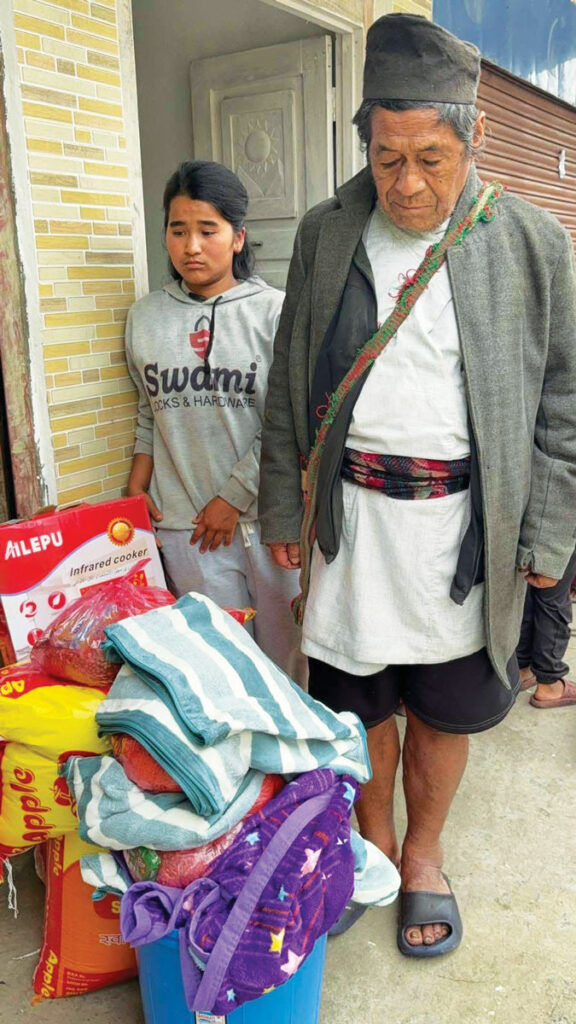
As immediate relief continued, the Rotaract office, led by DRR Sharma, began mobilising funds for relief and rehabilitation. Rotarians from outside Nepal, including India, also contributed. Flyers carrying QR codes were circulated for digital transfers done by overseas Rotarians through the Prime Minister’s Relief Fund.
In coordination with RIDE Basu Dev Golyan, a member of RC Biratnagar, Nepal, Rotary is working with its project partner ShelterBox to provide tents, tarpaulins, water filters, mosquito nets and cooking sets in the disaster-affected areas.
The ShelterBox team in Kathmandu met DG Vishnu Karkee, Dinesh Raj Manandhar and members of the Rotary Nepal District Disaster Relief Committees to assess the needs of affected communities. “Our Rotaractors and Rotarians are working with the team to identify and distribute the kits to the people,” said Bhandari.
DG Karkee said Rotarians visited affected sites on the third day after the floods, carrying supplies identified as necessary by local authorities, the Army and the Police. These included body bags, PPE kits, masks, gloves, medical kits, mattresses, sleeping bags and solar lamps.
“Teams of Rotarians visit the regions daily to assess the people’s needs,” he said. Rotary plans to establish temporary medical centres with a doctor and two nurses in affected localities. Twenty portable toilets with water facilities and filtration systems will be installed. Six motorbike ambulances will be sponsored to serve people stranded in hilly and road-inaccessible areas.
The relief effort is now looking beyond the immediate emergency. “We’ll work on rehabilitation and reconstruction once the government decides on the resettlement areas. We will join hands with the government to build schools and toilets, provide drinking water systems and income-generating projects for the needy,” said DG Karkee.