

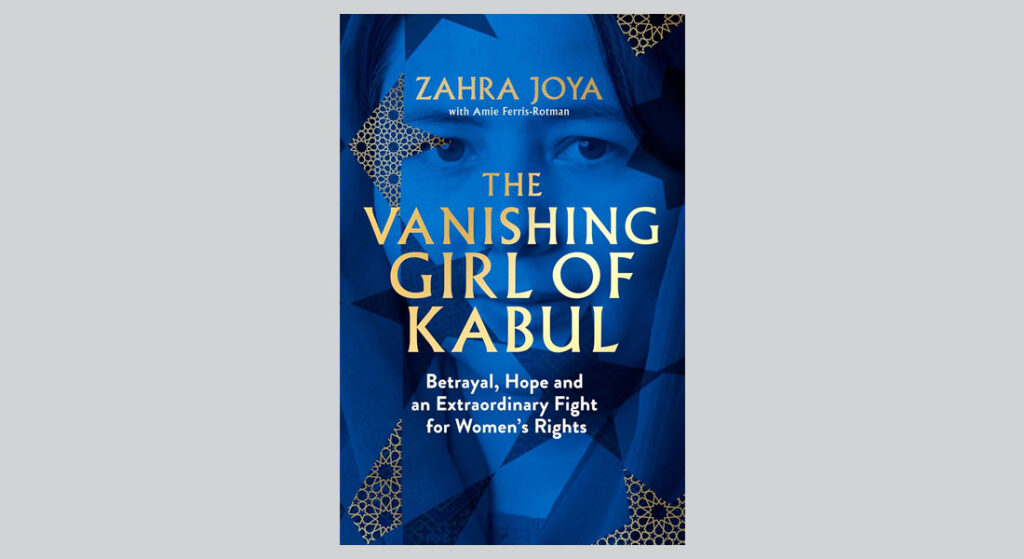
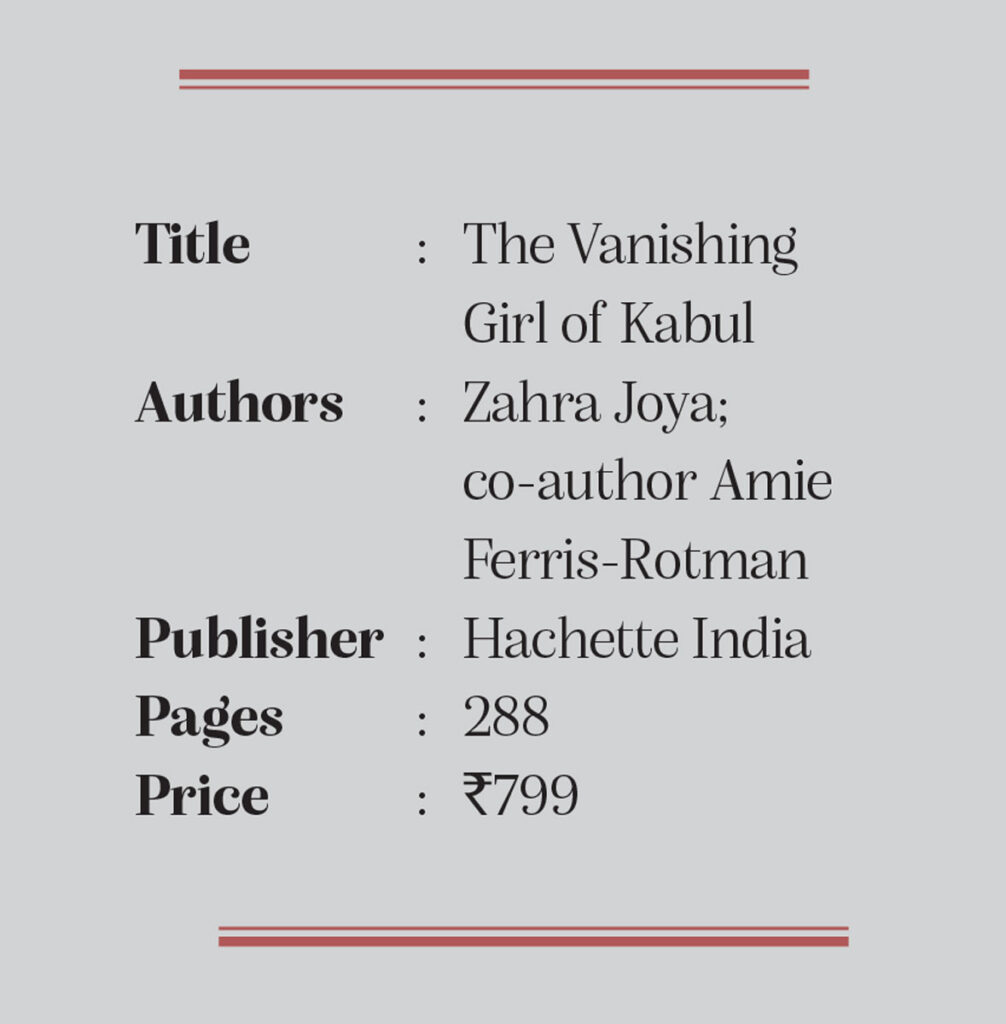
The essence of the book The Vanishing Girl of Kabul (Hachette India) by the award-winning journalist Zahra Joya (and co-authored by Amie Ferris-Rotman) is captured in these lines. “The Taliban’s oppression was never simply about clothing or schooling. It was about erasing an entire gender from public existence. It was about institutionalising misogyny as a governing principle… a way to rule through control, fear and the destruction of possibility. Once you normalise misogyny, the rest of the system is easier to break and then control.”
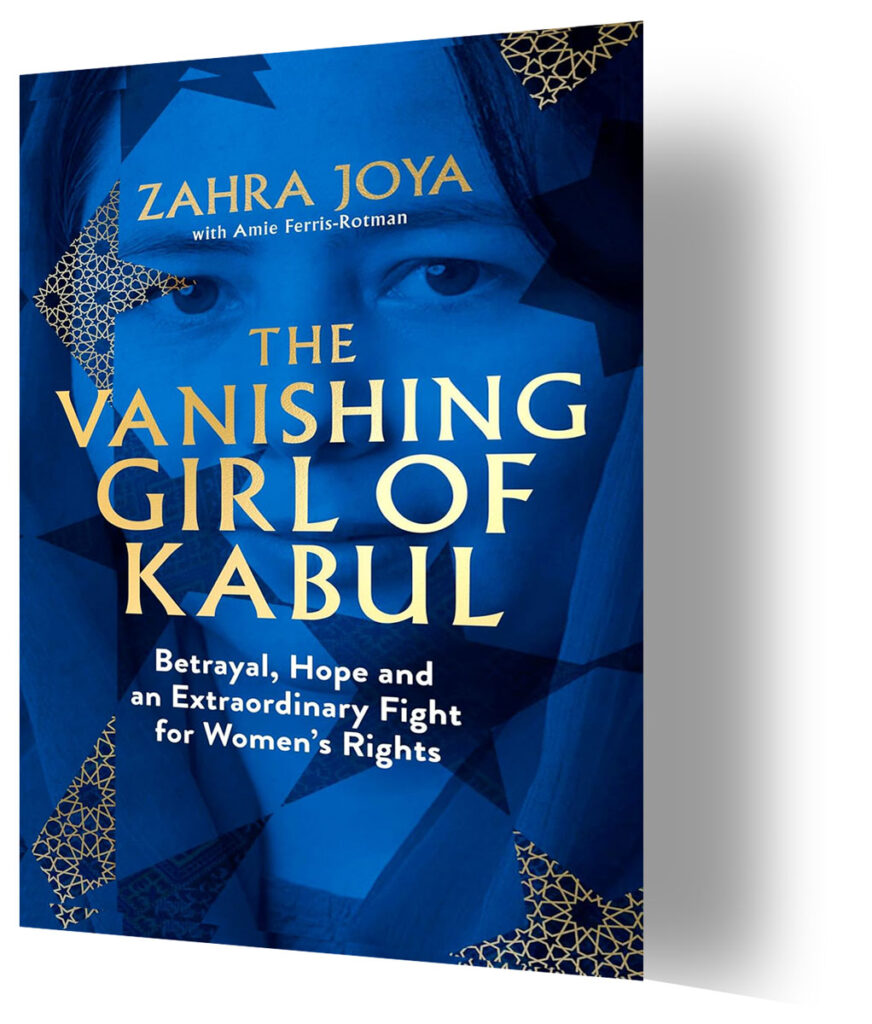
This book is yet another heartbreaking and gut-wrenching account of the fresh wave of cruelty and violence against Afghan women after US troops walked out of the country in 2021, offering a gift-wrapped nation to the Taliban. Despite their thinly disguised lies at international platforms, including in India, that the Taliban 2.0 regime would allow girls’ education and independence to women, ‘as allowed under Islamic law,’ Zahra tells us the ground reality is the exact opposite.
Her narrative is sprinkled with horror tales of the brutalisation…. kidnap/capture, thrashing, torture, forced marriage and rape of innumerable girls and women. Amie, a veteran British-American journalist and former Reuter correspondent in Kabul, tells in the intro this book is Zahra’s story. She had first met the young girl, with no knowledge of English, but a passion for reporting, in 2016 at one of her training sessions in Kabul.
Belonging to the minority Hazara community of Shias, Zahra grew up in Bamiyan and during Taliban’s first regressive regime, attended school dressed as a bacha posh (girl who passes for a boy), as her family mourned the birth of girls… till the son finally arrived. Once they shifted to Kabul, she stealthily worked for a news agency, unknown to her parents even while studying. She started her own news agency Rukshana Media in 2020, a year before the Taliban returned.
As news came of the Taliban abducting journalists, military interpreters and government employees, many artists, musicians, Youtubers and journalists went into hiding. Zahra fled her house, took refuge with friends and relatives, but masked, covered and facing grave danger, continued to send news from Afghanistan to foreign media, including The Guardian, which carried her reports.
Within a week it became evident that people like her, “an entire generation of dream chasers who were now abandoned by the world,” would have to flee Afghanistan just to survive. Initially, hundreds of Afghan women marched on the streets protesting as it became evident that their rights and freedom were being taken away, but with little success. With help from Amie Rotman, who apprised the British ambassador in Kabul about the threat to Zahra’s life, the journalist escaped from Kabul, along with her three sisters, brother and niece, packed with a few hundred refugees, in a British military plane.
The rest of the narrative, written in a simple, engaging and deeply moving style, is about the siblings making London their home. While Zahra, the eldest, continues to report on the atrocities and violence against Afghan women, as she has numerous sources back home, her younger siblings get an education. Her reportage is focused on the brutalisation and dehumanisation of Afghan women.
Soon recognition and awards come pouring in. In 2022 she visits the US for the first time to receive an award from the Gates Foundation. Here she meets Nobel Laureate Malala Yousafzai — “she and I shared a common enemy in the Taliban.” After her speech, when she is asked if there is any hope for the women of Afghanistan, Zahra can barely mask her anger and bitterness at the manner in which the US “had abandoned Afghanistan and moved on. They seemed to have forgotten that their embassy in Kabul no longer operated, that it was their own officials and soldiers who left it charred and singed,” she responds.
Zahra’s seething anger at the shameful role the US regime played throughout the Doha negotiations where the Afghan government had no role or voice, runs across this narrative, and shows the deep resentment Afghans, particularly its women, harbour in their hearts for being ‘betrayed’ by the Americans whom they had trusted.
This book makes a compelling, even though disturbing, reading for a graphic and authentic account of the sexual violence the Taliban continue to inflict on Afghan women. Bahar, who is studying management in Iran, returns home to celebrate Nowruz, is detained at the border by the Taliban, who take her into a room, call her a “prostitute, western slut,” thrash, strip and rape her repeatedly till she passes out. She wakes up to find one vertebra fractured, and needs three months treatment.
As Bahar and other rape victims contact Zahra to tell their stories… the Taliban were now going into homes, raping mothers and daughters, including little girls… the journalist herself suffers from acute trauma and frequent nightmares. But as she hammers out more such horrendous tales of brutality, the climax being a deliberately recorded video of a rape as the Taliban are now threatening victims that if they complain to anybody these videos will be uploaded on social media… more brave women come forward to tell their stories. The international media carries her reports; the atrocities against women are collated and put up before the ICC (International Criminal Court) at The Hague.
As you turn the last page, you can hear the bloodcurdling screams of Afghan women imploding the rest of the world… are you simply going to turn your backs on us, leaving us at the mercy of the Taliban?