

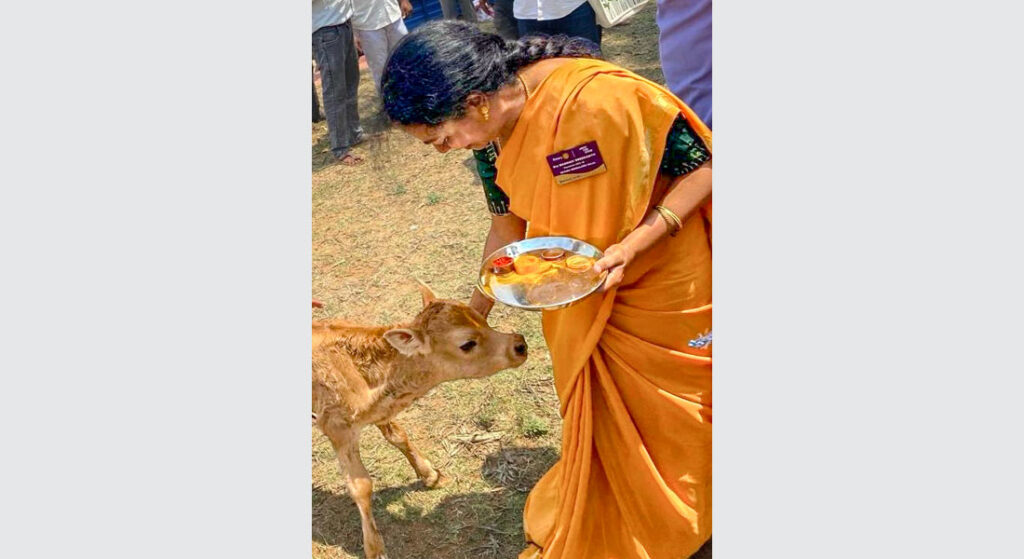
Sixty-three widows and single women from villages around Bengaluru received milch cows under Project Kamadhenu, a global grant initiative that aims to provide them with a sustainable source of income. The project was implemented in May by the Rotary Club of Bangalore Ullal, RID 3191, in partnership with RC Edinburgh, RID 1320, RC Dallas, Texas, RID 5810, and working partner RC Magadi Central, RID 3191.
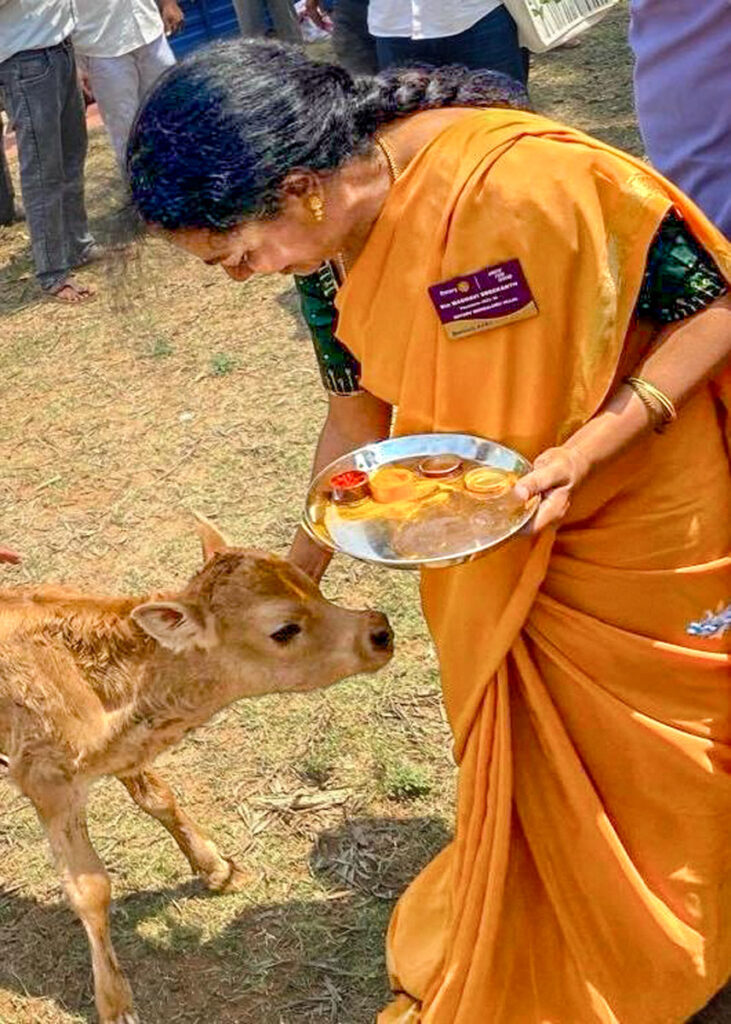
In Indian tradition, godaan (the gifting of a cow) is considered one of the most sacred and auspicious acts of charity. Revered as Kamadhenu in Hindu mythology, the cow symbolises abundance, nourishment and prosperity. By gifting milch cows to economically disadvantaged women, the project has combined this age-old cultural value with a practical livelihood intervention, explains club president Madhavi Shreekanth.
A ten-member committee, including three veterinary doctors, identified deserving beneficiaries with the help of village heads and community leaders. Preference was given to economically vulnerable women who had adequate space to rear cattle and access to land where fodder could be cultivated. Among the beneficiaries was a young widow raising a small child on her own, and a speech- and hearing-impaired woman who was struggling to find a stable source of income.
The committee shortlisted healthy, milk-yielding cows that were in the final stages of pregnancy and expected to calve within 15 to 20 days. The cows were sourced from the weekly village shandy held every Friday between 5 and 8 am.
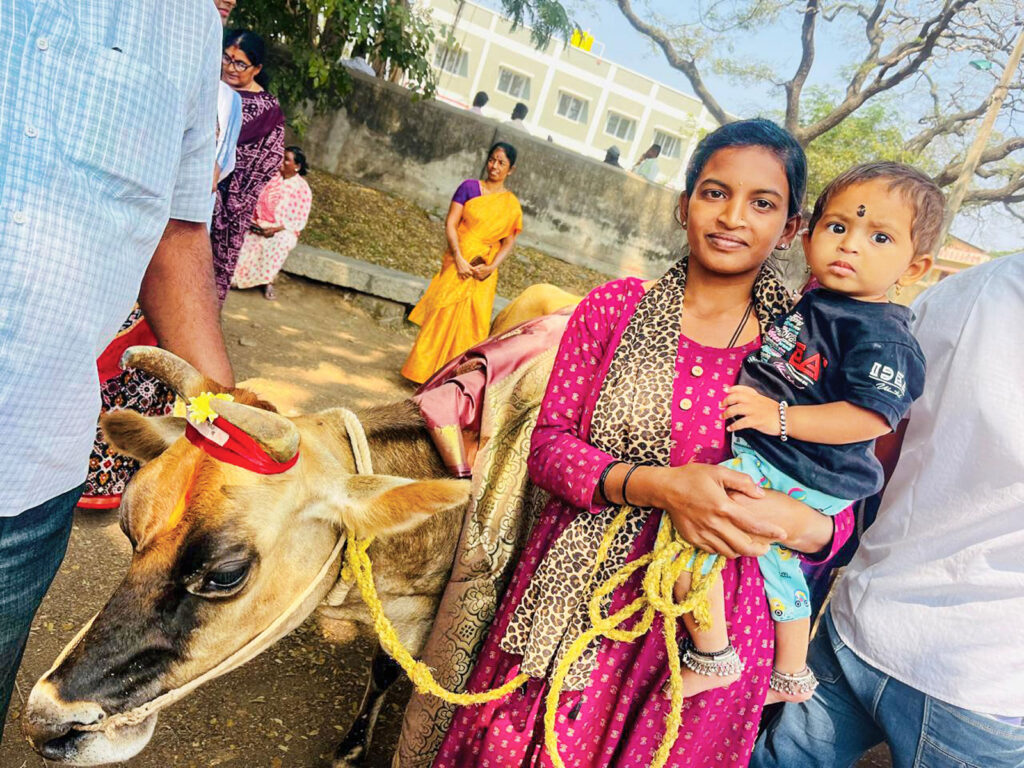
“As the purchase window was limited, we could procure only 12–15 cows at a time,” she says. As a result, the project was implemented in six phases over three months.
In the last phase four Rotarians from Maine, RID 7780, USA, joined the programme and were delighted to witness nine women receiving the cows.
Each animal cost between ₹55,000–70,000. “Since prices at the weekly shandy fluctuate, the cost varied. However, we were determined not to make any compromises on the health and quality of the cows,” she explains.
To ensure that the women would immediately begin earning an income, the club established linkages with local government-run milk federations. Beneficiaries signed agreements to supply milk directly to these federations, which in turn deposit payments into their bank accounts. The milk federations also provide nutritional supplements for the cattle, to help improve their health and productivity.
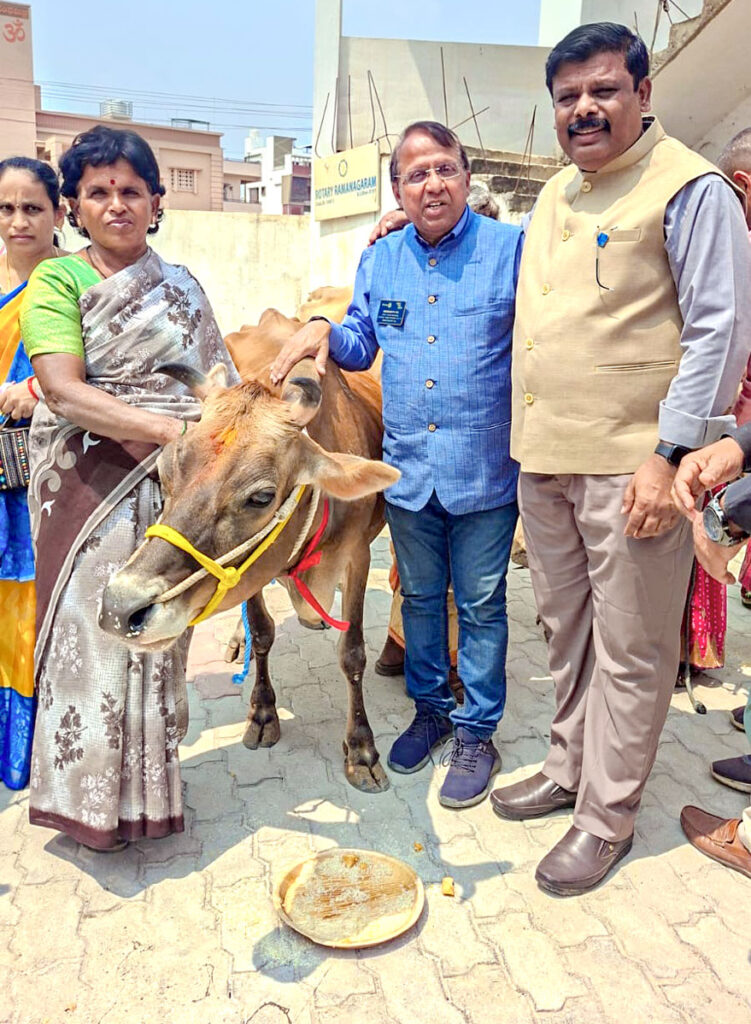
Each cow is expected to yield an average of 10 litres of milk a day, ensuring a steady stream of income for the beneficiaries, notes Madhavi. By linking the women directly with the milk federations, the project has created a reliable market for their produce while eliminating uncertainties in payment.
Rotarian veterinary doctors have trained the women in cattle care, animal health and nutrition, while a Rotarian Chartered Accountant has already conducted sessions on financial management, enabling the beneficiaries to manage and grow their earnings effectively.
The project was initially designed to support 54 women. However, prudent financial management resulted in surplus funds. After obtaining approval from TRF’s Grants Committee, the club expanded the programme to include nine additional beneficiaries, taking the total to 63 women.
For Madhavi and her team, the most rewarding moments came during the handover ceremonies. Each cow was treated with reverence before being entrusted to its new owner. Traditional poojas were performed, bananas and jaggery were offered to the animals, and aarti was conducted. Every cow was given a name and identification number before being handed over. “The entire process was deeply satisfying,” she says.
One memorable incident occurred during the final phase of the project when a cow went into labour and delivered a healthy calf at the very venue of the handover ceremony.
“We were overjoyed. Everyone saw it as a wonderful blessing and a sign of good fortune for the beneficiary,” recalls Madhavi.
Chartered only in 2023 with 21 members, the club has expanded rapidly to 108 members within its first year and today remains a vibrant 101-member club. It has also chartered a satellite club.