





An adult human head weighs approximately 5kg. This considerable weight is balanced on the smallest and most mobile part of the spine, the eight cervical vertebrae that make up the neck. By the age of five, a child’s head has already reached almost adult size and weight. From then onwards, the head resembles a heavy ball balanced on a slender, flexible pedestal.
Throughout life the head is rarely still. It constantly moves up and down, turns from side to side, and rotates in a circle. These remarkable movements are made possible because the cervical vertebrae glide smoothly over one another. Between each vertebra lies an intervertebral disc, which acts as a shock absorber or cushion. The joints are lubricated by synovial fluid, allowing movement with minimal friction. Strong muscles and ligaments support the neck bones and protect the delicate spinal cord and nerves that pass through it.
Unfortunately, modern life places tremendous strain on this delicate structure.
The abuse often begins in childhood. Schoolchildren frequently carry bags that are far heavier than recommended. Government guidelines specify maximum school bag weights, starting at about 1kg in Class I and gradually increasing to 5kg by Class X. These recommendations are often ignored. Even when backpacks are used, many children sling them casually over one shoulder instead of wearing both straps. This uneven distribution of weight forces the neck and shoulder muscles on one side to work much harder, resulting in muscle strain and poor posture. The habit frequently continues into college and adulthood until the backpack is replaced by a heavy handbag, laptop bag or briefcase carried in one hand.
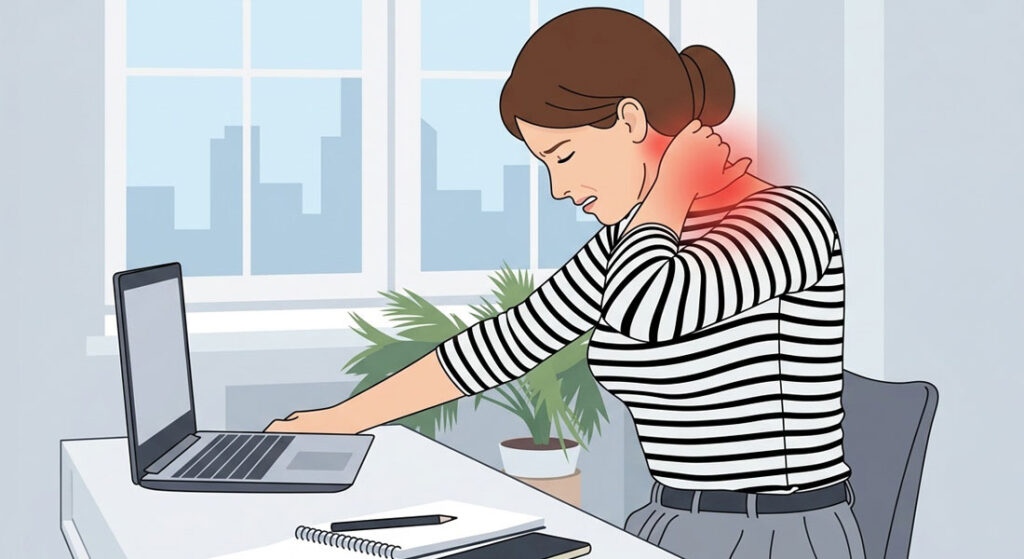
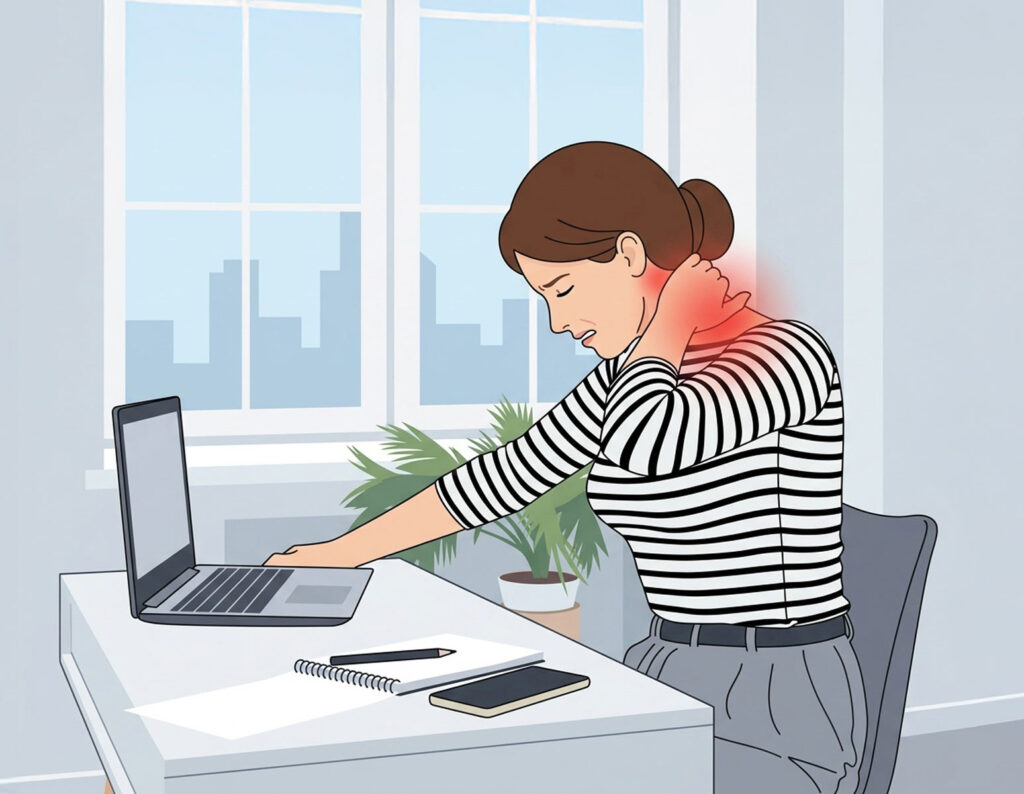
Poor posture is another major culprit. Whether studying, working from home, or sitting in an office, many people spend long hours bent over a desk. The computer monitor should be positioned at eye level, with the chair and desk adjusted to the correct height. When the head tilts forward, the load on the cervical spine increases dramatically. A head weighing 5kg can exert the equivalent of 20–25kg of force on the neck when bent forward.
The widespread use of smartphones, tablets and laptops has created an epidemic of what is popularly called “tech neck.” People spend hours looking down while messaging, reading, watching videos, attending virtual meetings or scrolling through social media. Because the mind is absorbed in the activity, the warning signs of discomfort are ignored until mild stiffness progresses to persistent pain.
Sit upright with your shoulders relaxed, your feet flat on the floor and your computer screen at eye level. Avoid holding the phone between your ear and shoulder.
Even travelling can contribute to neck problems. Most car seats are equipped with adjustable headrests, but few people take the trouble to position them correctly. During long journeys, an improperly adjusted headrest allows the head to fall forward or sway from side to side, increasing muscle fatigue and stiffness. A correctly positioned headrest should support the middle of the back of the head rather than the neck alone.
The nerves supplying the shoulders, arms and hands emerge from openings between the cervical vertebrae. As we age, wear and tear of the discs and joints may cause these openings to narrow. Bulging discs or bony overgrowths can compress the nerves, producing pain, numbness, tingling or weakness in the shoulders, arms or hands. Sometimes the pain is not felt in the neck at all. It may be referred to the shoulder blade, upper back, or even the chest, occasionally mimicking the pain of a heart attack. Persistent neck pain often interferes with sleep, reduces work efficiency, and affects quality of life.
Fortunately, most episodes of neck pain improve with simple measures.
The first step is to correct posture. Sit upright with your shoulders relaxed, your feet flat on the floor, and your computer screen at eye level. Avoid holding the phone between your ear and shoulder. If you work at a desk, stand up, stretch, and walk around for a few minutes every 30 to 60 minutes.
Applying alternating hot and cold packs to the neck for about five minutes each, repeated three times a day, often provides relief. A short course of pain relievers such as paracetamol or, if appropriate, a non-steroidal anti- inflammatory drug (NSAID) like ibuprofen may reduce pain and inflammation. Sleeping on a low, supportive pillow helps maintain proper alignment of the neck. Some people also benefit from applying a capsaicin-containing ointment to the back of the neck before bedtime.
Gentle stretching and strengthening exercises are equally important. Physiotherapists can teach exercises that improve posture, strengthen the neck and shoulder muscles, and restore flexibility. They may also use treatment such as heat therapy, ice packs, ultrasound or Transcutaneous Electrical Nerve Stimulation (TENS) to relieve pain. Yoga, when practised under expert supervision, can improve posture, flexibility, balance and muscle strength, reducing the risk of recurrent neck pain.
A soft cervical collar may provide temporary relief by limiting neck movement, especially during travel or acute pain. However, prolonged use weakens the supporting muscles. It should not be worn continuously for more than three hours at a time or for longer than one to two weeks unless specifically advised by a doctor.
If neck pain persists beyond two or three weeks despite these measures, or if it follows a fall, sports injury, or road accident, medical evaluation is essential.
Imaging tests are not routinely required for simple neck pain but become necessary when serious injury or nerve compression is suspected. X-rays can reveal fractures, osteoporosis, abnormal alignment, arthritis or narrowing of the disc spaces. An MRI provides detailed information about discs, ligaments, nerves and the spinal cord, making it the investigation of choice when nerve root or spinal cord compression is suspected. A CT scan offers excellent three-dimensional views of the bones, while nerve conduction studies may be required in patients with progressive numbness or weakness.
Blood tests may be advised to detect conditions such as Vitamin D deficiency, low calcium levels, inflammatory arthritis, rheumatoid arthritis, ankylosing spondylitis or infections. Treating these underlying disorders often reduces neck pain.
Surgery is rarely required. It is reserved for patients with severe compression of the spinal cord or nerve roots, persistent weakness, or pain that does not respond to adequate conservative treatment.
The neck is remarkably strong, yet surprisingly vulnerable. Paying attention to posture, avoiding unnecessary strain, exercising regularly and seeking timely medical advice when symptoms persist can keep this hardworking part of the body healthy and pain-free for many years.
The writer is a paediatrician and author of Staying Healthy in Modern India